the conquered
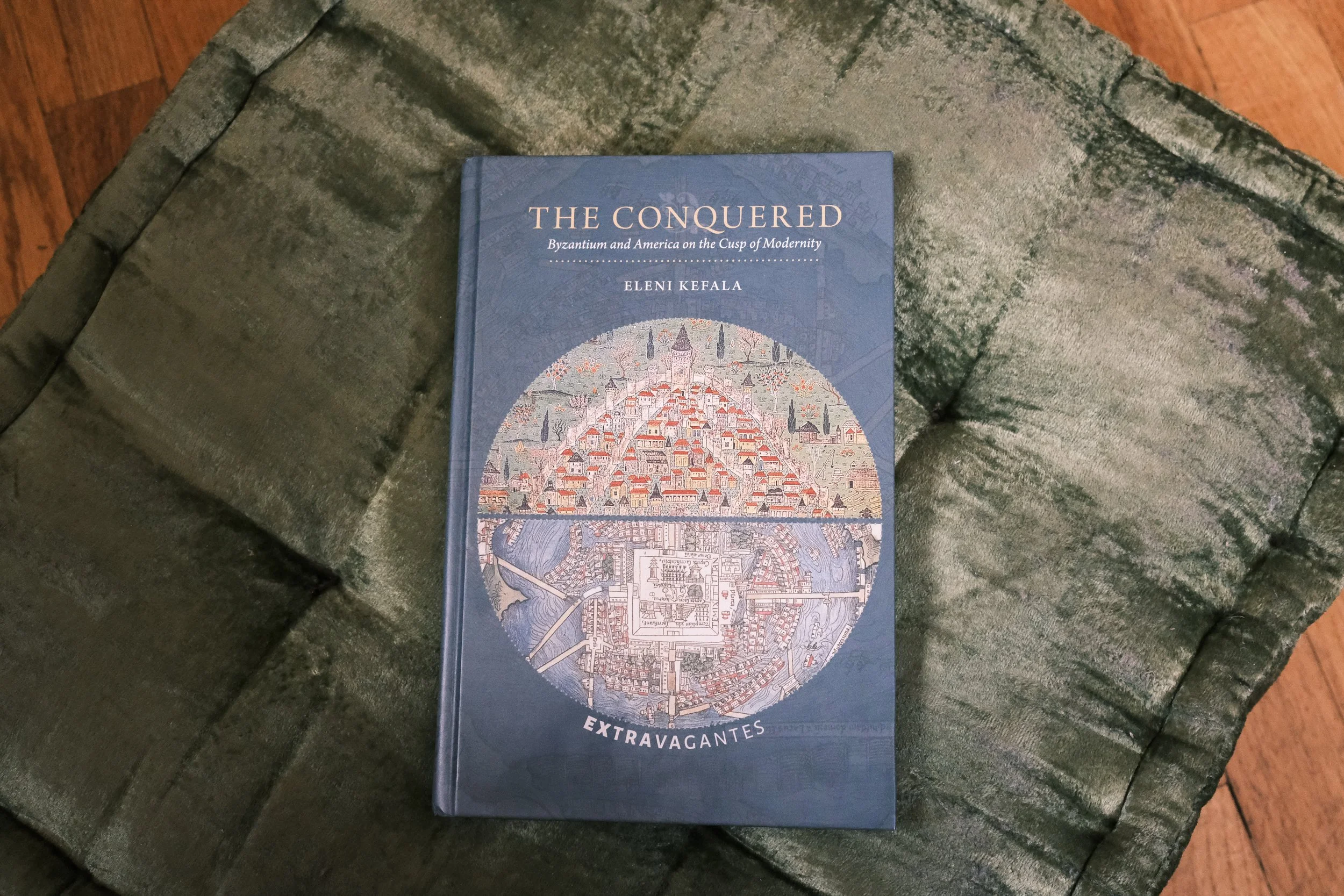
The Ottomans captured the Byzantine capital of Constantinople in 1453, and less than a century later, in 1521, the Spaniards (with a great deal of help from temporary allies native to México who despised the Aztecs) took Tenochtitlan. How would the “conquered” people respond?
It is important to first note that understanding how people perceive (the passage of) time is critical to understanding their reaction(s) when normal life is suddenly interrupted. Our temporal understanding, after all, informs our worldview and influences our behavior. While the Byzantines interpreted events as occurring in a linear fashion, the Aztecs had a cyclical notion of time, where they thought of periods of disorder as unavoidable and therefore expected them. Though both societies would view their conquest as traumatic, ultimately their relationship with this trauma would differ based on their conception of time.
The author argues that cultural trauma is socially constructed - a social crisis prompts a cultural crisis because it is a fundamental threat to an identity claimed by many. Cultural trauma has a target audience and needs to be nurtured by clearly defining what has happened, who the victim is, who the perpetrator is, and what the relationship is between the victim and the audience. Establishing this relationship is important because it reinforces the understanding that the crisis is shared and the trauma must continually be transmitted to maintain the collective memory of, and fight against, the perceived threat. Cultural trauma, however, does not necessarily correspond to psychic trauma. In fact, cultural trauma can be constructed retrospectively, even when events in their own time were not considered “traumatic.”
Cultural trauma was constructed and maintained by Aztecs and Byzantines using poems, songs, laments. In Byzantine poetry, the people are almost always innocent victims of catastrophes and the responsibility is God’s (whereas in the Catholic tradition, it is the people who have been sinful and therefore punished by God!). The Byzantines also blame the Ottomans and angels/saints. The audience identifies and “participates” in such poetry because familiar traditions and themes are utilized. For centuries Byzantine laments appeared in Greek (modern nation) school curriculum, demonstrating how state institutions used the narrative in nationalist movements after gaining independence in 1821 from the Ottoman Empire (which happens to be the same year Mexico finalized its independence from Spain).
The Aztecs also complained about divine abandonment. They believed that Huitzilopochtli (a principal deity) left them to their fate because they did not follow the rituals correctly (notably similar to Catholicism). Pre-conquest rivals were (rightly) blamed too - as the conquest was more in fact a rebellion of tributary and rival states that took advantage of the opportunity to topple their hated neighbor, the Aztecs. The indigenous allies of Cortes numbered around 200,000, whereas a force of roughly 900 men represented Spain and its interests.
From the contemporary Western European perspective, a “narcissistic modernity” narrative was evident. Byzantium and pre-Colombian (including civilizations not only in central Mexico) America were the benighted “others,” who could only progress using the “superior” European model - what Enrique Dussel calls the “irrational myth of modernity.” Byzantium had made considerable advancements in medicine, healthcare, mathematics, astronomy, education, etc., but was still seen as retrograde by Western Europe. Pre-Columbian societies used intricate irrigation systems, bathed properly, created accurate calendars, developed impressive commerce and transportation routes, learned how to farm on mountains, invented complex warfare tactics, but were portrayed by Western Europeans as savage and childlike - stereotypes that remained until (and in some cases beyond) the Enlightenment. Byzantium was “external” in time, while Pre-Colombian America was “external” in space.
The Europeans exploited indigenous material wealth and production capacity by using mines to extract silver and by implementing slavery for free-labor (while introducing and spreading diseases that decimated local populations). They also benefited from the availability of new crops (beans, corn, avocados, potatoes, tomatoes). This exploitative behavior by (and favorable results for) the colonizers would in turn contribute to the rise of capitalism.
While Spanish writers wished to express a clear separation between the “pagan” past and the “enlightenment” of the newly converted people of the New World, the Aztec cyclical notion of time, as previously mentioned, did not make such a distinction between eras, and therefore perhaps helped the people more easily adapt to changes implemented by the Spanish. Indigenous notions of divinity (e.g. the divine abandonment interpretation) were compatible with Catholicism, and many traditions practiced to this day mix indigenous with Catholic rituals and beliefs. The nobility saw an opportunity (that they would also take) to become part of the forming bureaucracy to ensure their place in the social hierarchy. Furthermore, since the 19th century, the concept of mestizaje, the cultural hybridity of indigenous and European, has been used as an understanding of national identity of modern Mexico. Thus, survival strategies were developed and in some cases successfully adopted following the fall of Tenochtitlan.
We often think of modernity as consisting of the processes that have helped make our lives easier and more comfortable. But we continue to struggle with the fact that violence played a major role in the “modernization” of nations, and it can be argued that the “irrational myth of modernity” (perceived hierarchy based on cultural values and technological advancement) persists as a belief held by many people in the twenty-first century. “Modernity” itself is a problematic term because there have either been multiple waves of modernity or various forms of modernity: the first being the Renaissance and the colonization of America, the second being the Enlightenment, and the third being post-war(s) and de-colonization in the twentieth century.
The relative stability and peace enjoyed during the Enlightenment in (Western) Europe created a favorable climate for advancements in technology, communication, and education. But the brutality of the colonization of America and the major wars of the nineteenth and twentieth century influenced and shaped nations in unique ways, creating problems that remain to be solved.
It is not difficult to find examples of cultural trauma being expressed today; nor is it hard to see how balancing cultural assimilation with cultural exchange and respect in a “globalized” world continues to be a challenge. Industrial, scientific, and technological advancements certainly contribute to the comforts of modernity, but economic disparity, ideological incompatibility, and spiritual intolerance limit its awesome potential. Without comprehensive change, modernity is a label synonymous with contemporary rather than a description of societal prioritization of equity, stability, liberty, and respect.
With this unique comparison of the responses to conquest among the Byzantine and Aztec people and from their perspective, the author provides new areas of research to explore in order to better understand modernity not only as a historical era/event, but also as a constantly evolving concept.
notes:
refreshing and fascinating comparison
the Byzantines self-identified as Romaioi, and the Aztec thought of themselves as Mexica. All too often we fall into the bad habit of applying exonyms to civilizations long gone
the “Byzantines” prophesized that the world would end in the year 7000 of the Orthodox Christian calendar, which corresponds to the year 1492 of the Gregorian calendar. Was Columbus secretly a practitioner of the Greek Orthodox faith and subscribed to this belief?