
girls that never die
by Safia Elhillo

At once vulnerable and assertive, the Sudanese-American demonstrates her agency, tells her story on her own terms without omission, and advocates for those who have been silenced. She recounts harrowing experiences of intimidation and violence, and tries to make sense of a life lived in two different worlds (often simultaneously).
She explains how regimes use systems, hierarchies, laws, rules, regulations, and policies to subjugate individuals within designated groups of people, and to justify this oppressive behavior. The oppressor fears challenges to his supposed “natural” privilege and therefore forbids formative experiences and demands specific contributions to patriarchal society.
But the desire to control can never be fully satisfied, the pursuit of legacy-leaving results in manufactured memory, and cowardice is incompatible with life truly experienced. Only a fighting spirit can transcend the finality of death; some girls have the mindset, attitude, pure courage and energy to ensure that they will never die.
note:
the (religious) concept of purity forever picks a fight with basic biology

the immortal king rao
by Vauhini Vara

We can recognize the value of technology as a public utility: its promise and capacity to provide access to information and opportunity, to outsource certain tasks, to increase living standards, to take better care of the earth and help heal its inhabitants. But as technology plays an ever increasing role in our lives, new complex issues regarding ethics, distribution of power, and human purpose permeate our social discourse and demand our attention.
Technology can be weaponized to distract and divide populations for the private absorption of wealth and resources, and the consolidation of power. It can help spread misinformation much faster and more easily than previously possible (rendering my printing press useless!), which reduces trust in institutions, sows political division, and encourages crises of individual identity. It will continue to alter workforce composition, and if we are unable to adapt (as many “developed” nations have for centuries when new tech displaces skilled laborers) and present either job opportunities in new fields or a more rational relationship with work, economic disparity and resentment will continue to grow. Fulfillment will become more elusive and isolation will become more common.
Technology is a tool that, like the mind, can be utilized either as a wonderful servant or become a terrible master. If its potential and power is left in the hands of the elite few, without proper regulation, the author warns that it is not difficult to envision a future that includes the replacement of nation-states with a board that governs using an algorithm, a social credit system combined with free market capitalism, “immortality” via memory card, capitulation to climate change and its enablers… the beauty of human connection will become the misery of humans forcibly connected in order to benefit the few.
Or (perhaps) we will experience something far worse. As an omnipresent, omniscient, and omnipotent entity, what fate will AI determine for humanity come Judgment Day?
notes:
nice use of nonlinear narrative
illustrates the struggles of Dalit life in India and challenges for the Indian diaspora, weaves together the personal and the political to argue in favor of the practical
please, take me back to the days of the Zune
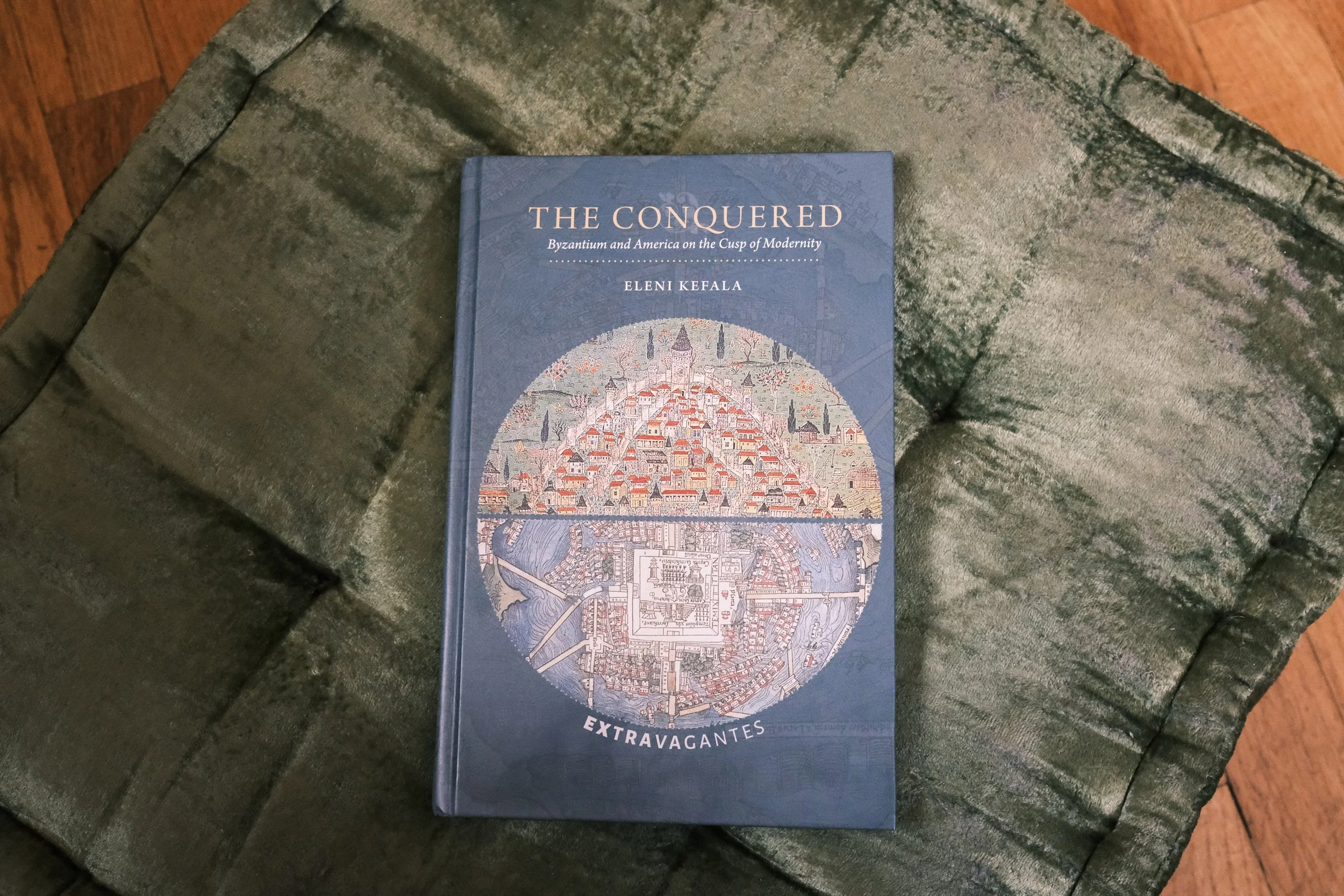
the conquered
by Eleni Kefala
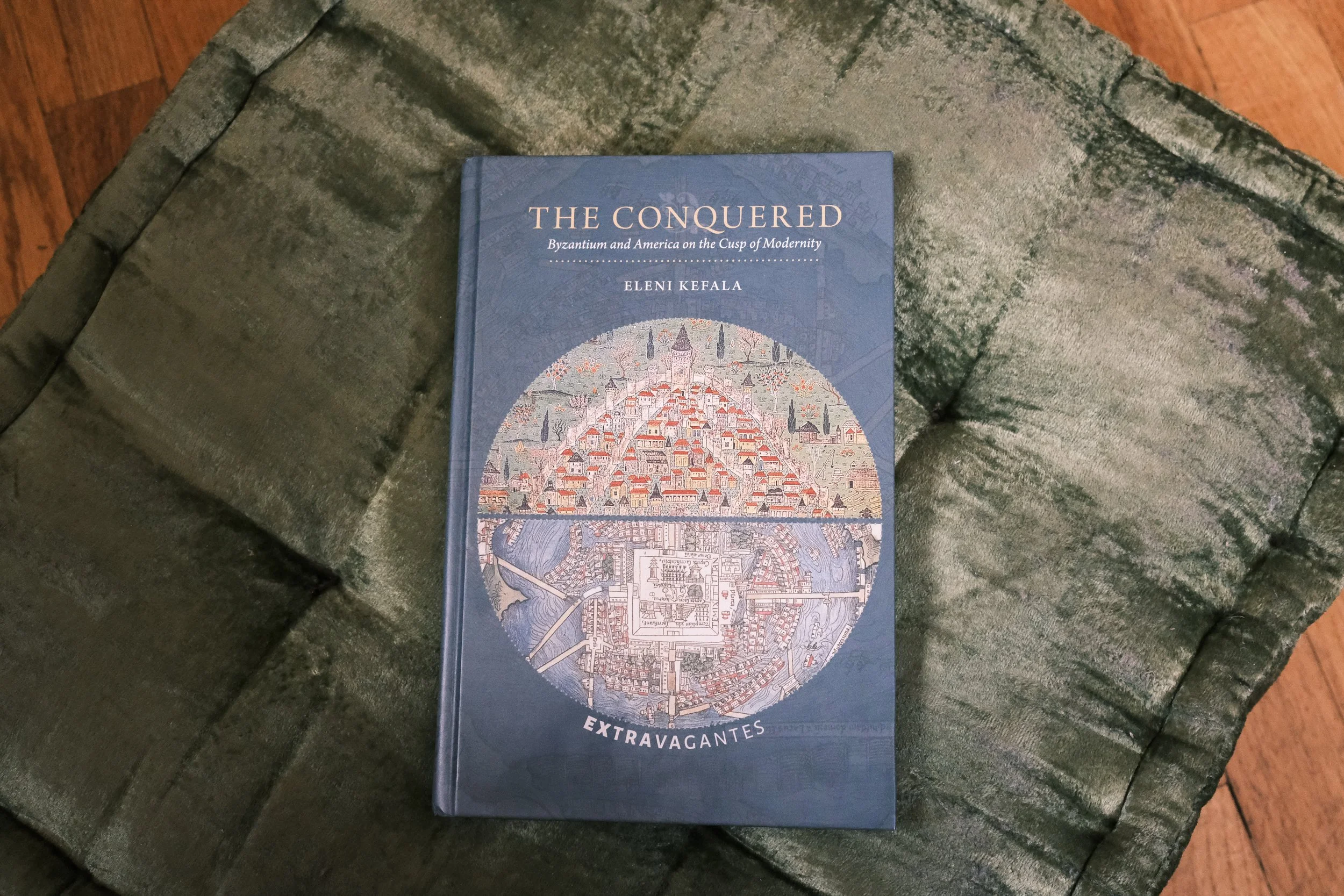
The Ottomans captured the Byzantine capital of Constantinople in 1453, and less than a century later, in 1521, the Spaniards (with a great deal of help from temporary allies native to México who despised the Aztecs) took Tenochtitlan. How would the “conquered” people respond?
It is important to first note that understanding how people perceive (the passage of) time is critical to understanding their reaction(s) when normal life is suddenly interrupted. Our temporal understanding, after all, informs our worldview and influences our behavior. The Byzantines interpreted events as occurring in a linear fashion, while the Aztecs had a cyclical notion of time, where they thought of periods of disorder as unavoidable and therefore expected them. Though both societies would view their conquest as traumatic, ultimately their relationship with this trauma would differ based on their conception of time.
The author argues that cultural trauma is socially constructed - a social crisis prompts a cultural crisis because it is a fundamental threat to an identity claimed by many. Cultural trauma has a target audience and needs to be nurtured by clearly defining what has happened, who the victim is, who the perpetrator is, and what the relationship is between the victim and the audience. Establishing this relationship is important because it reinforces the understanding that the crisis is shared and the trauma must continually be transmitted to maintain the collective memory of, and fight against, the perceived threat. Cultural trauma, however, does not necessarily correspond to psychic trauma. In fact, cultural trauma can be constructed retrospectively, even when events in their own time were not considered “traumatic.”
Cultural trauma was constructed and maintained by Aztecs and Byzantines using poems, songs, laments. In Byzantine poetry, the people are almost always innocent victims of catastrophes and the responsibility is God’s (whereas in the Catholic tradition, it is the people who have been sinful and therefore punished by God!). The Byzantines also blame the Ottomans and angels/saints. The audience identifies and “participates” in such poetry because familiar traditions and themes are utilized. For centuries Byzantine laments appeared in Greek (modern nation) school curriculum, demonstrating how state institutions used the narrative in nationalist movements after gaining independence in 1821 from the Ottoman Empire (which happens to be the same year Mexico finalized its independence from Spain).
The Aztecs also complained about divine abandonment. They believed that Huitzilopochtli (a principal deity) left them to their fate because they did not follow the rituals correctly (notably similar to Catholicism). Pre-conquest rivals were (rightly) blamed too - as the conquest was more in fact a rebellion of tributary and rival states that took advantage of the opportunity to topple their hated neighbor, the Aztecs. The indigenous allies of Cortes numbered around 200,000, whereas a force of roughly 900 men represented Spain and its interests.
From the contemporary Western European perspective, a “narcissistic modernity” narrative was evident. Byzantium and pre-Colombian (including civilizations not only in central Mexico) America were the benighted “others,” who could only progress using the “superior” European model - what Enrique Dussel calls the “irrational myth of modernity.” Byzantium had made considerable advancements in medicine, healthcare, mathematics, astronomy, education, etc., but was still seen as retrograde by Western Europe. Pre-Columbian societies used intricate irrigation systems, bathed properly, created accurate calendars, developed impressive commerce and transportation routes, learned how to farm on mountains, invented complex warfare tactics, but were portrayed by Western Europeans as savage and childlike - stereotypes that remained until (and in some cases beyond) the Enlightenment. Byzantium was “external” in time, while Pre-Colombian America was “external” in space.
The Europeans exploited indigenous material wealth and production capacity by using mines to extract silver and by implementing slavery for free-labor (while introducing and spreading diseases that decimated local populations). They also benefited from the availability of new crops (beans, corn, avocados, potatoes, tomatoes). This exploitative behavior by (and favorable results for) the colonizers would in turn contribute to the rise of capitalism.
While Spanish writers wished to express a clear separation between the “pagan” past and the “enlightenment” of the newly converted people of the New World, the Aztec cyclical notion of time, as previously mentioned, did not make such a distinction between eras, and therefore perhaps helped the people more easily adapt to changes implemented by the Spanish. Indigenous notions of divinity (e.g. the divine abandonment interpretation) were compatible with Catholicism, and many traditions practiced to this day mix indigenous with Catholic rituals and beliefs. The nobility saw an opportunity (that they would also take) to become part of the forming bureaucracy to ensure their place in the social hierarchy. Furthermore, since the 19th century, the concept of mestizaje, the cultural hybridity of indigenous and European, has been used as an understanding of national identity of modern Mexico. Thus, survival strategies were developed and in some cases successfully adopted following the fall of Tenochtitlan.
We often think of modernity as consisting of the processes that have helped make our lives easier and more comfortable. But we continue to struggle with the fact that violence played a major role in the “modernization” of nations, and it can be argued that the “irrational myth of modernity” (perceived hierarchy based on cultural values and technological advancement) persists as a belief held by many people in the twenty-first century. “Modernity” itself is a problematic term because there have either been multiple waves of modernity or various forms of modernity: the first being the Renaissance and the colonization of America, the second being the Enlightenment, and the third being post-war(s) and de-colonization in the twentieth century.
The relative stability and peace enjoyed during the Enlightenment in (Western) Europe created a favorable climate for advancements in technology, communication, and education. But the brutality of the colonization of America and the major wars of the nineteenth and twentieth century influenced and shaped nations in unique ways, creating problems that remain to be solved.
It is not difficult to find examples of cultural trauma being expressed today; nor is it hard to see how balancing cultural assimilation with cultural exchange and respect in a “globalized” world continues to be a challenge. Industrial, scientific, and technological advancements certainly contribute to the comforts of modernity, but economic disparity, ideological incompatibility, and spiritual intolerance limit its awesome potential. Without comprehensive and continuous change (dare I say, revolution?), modernity is a label synonymous with contemporary rather than a description of societal prioritization of Enlightenment ideals that have yet to be realized, such as equity, stability, liberty, and respect.
With this unique comparison of the responses to conquest among the Byzantine and Aztec people and from their perspective, the author provides new areas of research to explore in order to better understand modernity not only as a historical era/event, but also as a constantly evolving concept.
notes:
refreshing and fascinating comparison
the Byzantines self-identified as Romaioi, and the Aztec thought of themselves as Mexica. All too often we fall into the bad habit of applying exonyms to civilizations long gone
the “Byzantines” prophesized that the world would end in the year 7000 of the Orthodox Christian calendar, which corresponds to the year 1492 of the Gregorian calendar. Was Columbus secretly a practitioner of the Greek Orthodox faith and subscribed to this belief?

that’s not how you wash a squirrel
by David Thorne

Yeah, you think you know how to wash a squirrel, but honestly, and be honest with yourself, how much water do you waste?

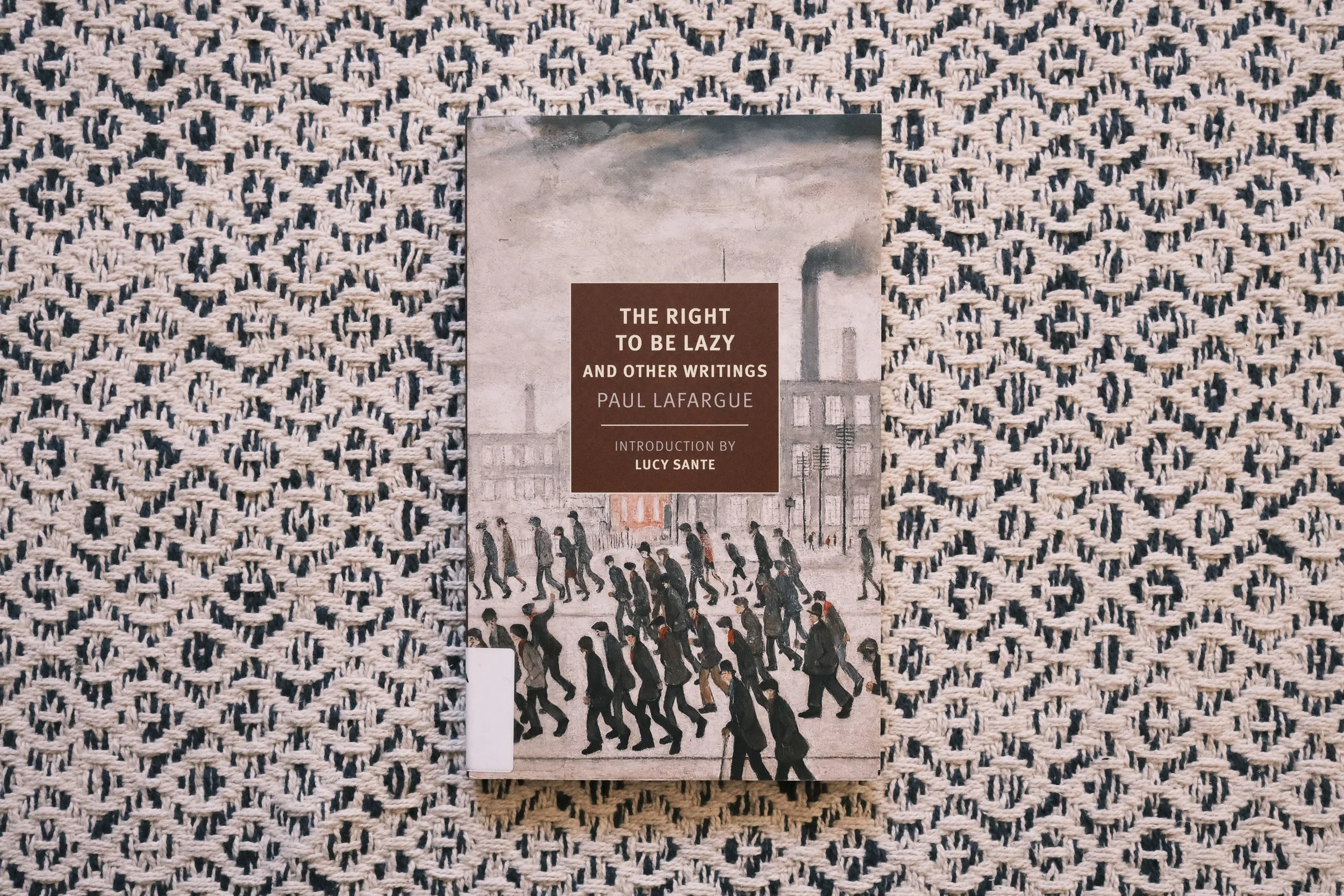
the right to be lazy
by Paul Lafargue
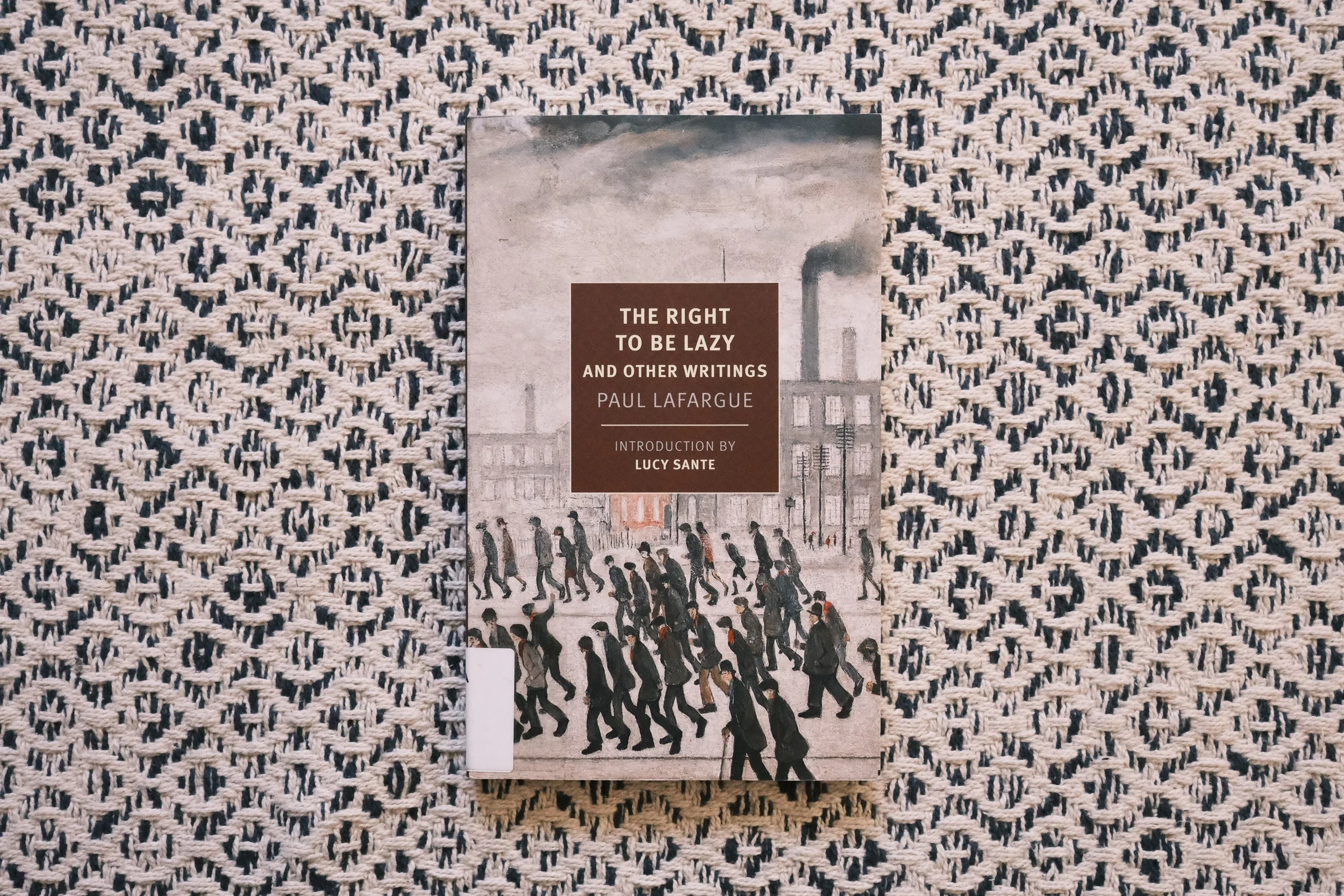
The author writes of a “strange madness” that has “taken hold of the working class in nations where capitalist civilization reigns,” in the “Fake Age” era that he lived in, during which the quality of products had worsened to “promote sales and lessen their lifespan.” This sounds familiar.
The bourgeois revolution’s “Rights of Man” did not include the “Rights of Laziness” - the bourgeois class instituted a wage labor system to maximize profits and consumption as productive power exponentially increased. Christian, economic, and freethinking “morality,” the author explains, is used to promote a passion for work, whereas work should instead “become a mere condiment to flavor the tasty dish of laziness.” He argues in favor of three-hour workdays and encourages workers to consume the goods they produce - calling for the proletariat to demand “what’s mine.”
The author provides a historical context for his arguments, stating that in ancient societies like the Greeks and Romans, where war was the norm, a separation of tasks became necessary; a “free” man could not be expected to provide both manual labor and fulfill his role in looking after the Republic as a soldier, statesman, etc. Therefore, labor and trades were done by slaves. Aristotle proclaimed that if tools could do their own work, there would be no need for slaves, and the author argues that given the contemporary capability of tools, Aristotle’s dream is “our reality” - that the machine is “our savior.”
Perhaps the author would be impressed by current rates of consumption of material goods among workers, though, given his dedication to rationality, I hesitate to imagine they would not alarm or even disgust him. The means of modern production, wealth inequality, and result-obsessed work culture might further convince him that the fight for the right to be lazy is a lost cause.
notes:
Socialist Frenchman writes about class issues in 19th century, and commits “rational suicide” in the 20th
This particular Frenchman, however, had a unique background. He was born in Cuba of mixed heritage - French Christian, French Jewish, Jamaican Indian, and Dominican mulatto, and once remarked that “the blood of three oppressed races runs in my veins”
Greeks and Romans, Romans and Greeks - Oh, Western Civilization, you are so amazing! 😍
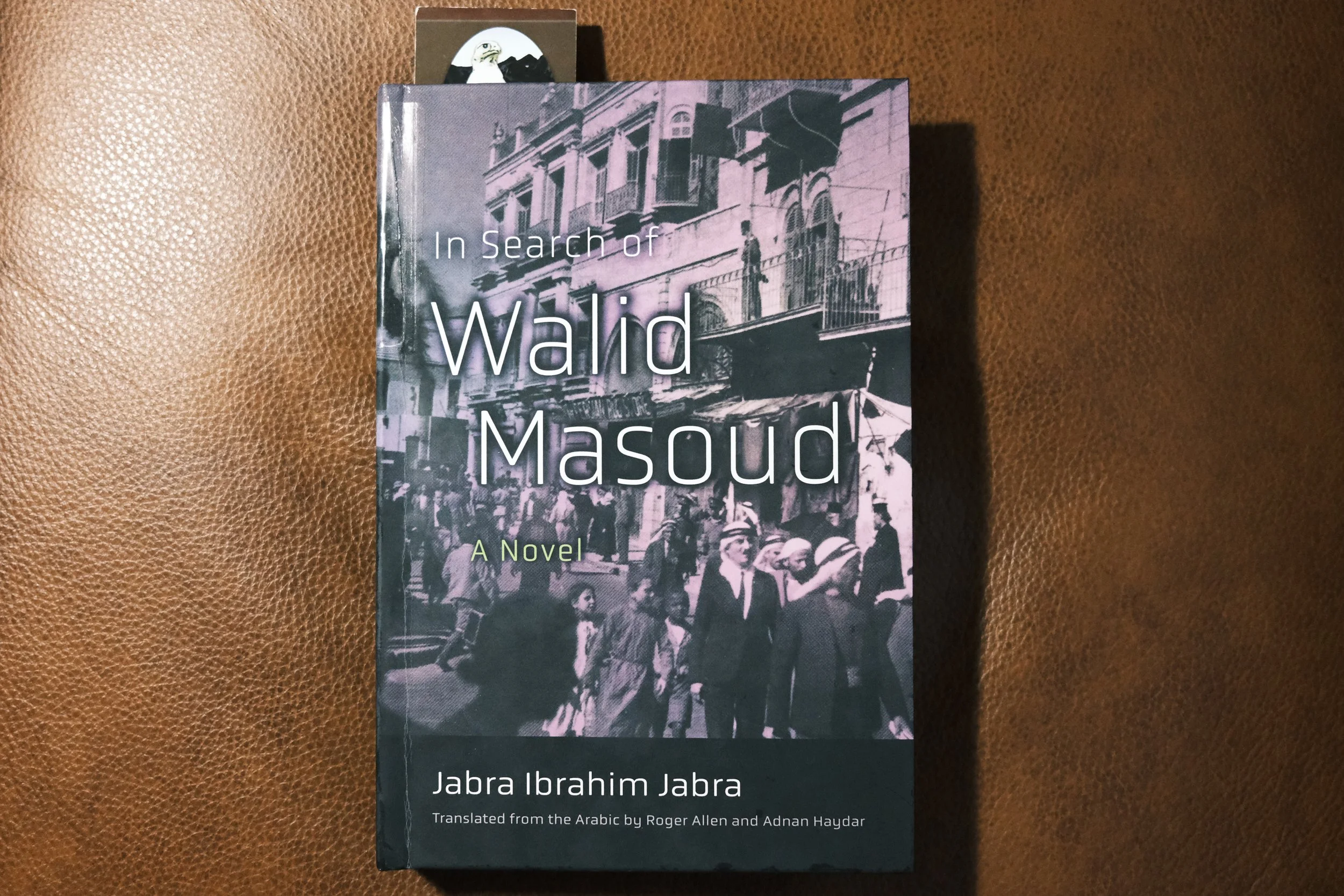

syntax of the river
Barry Lopez in conversation with Julia Martin

The river is not going to judge you, or tell you that you are wrong. Out here, you can “examine the shape of your own prejudices without fear of reprisal.” Observe the river, and be mindful of what Heraclitus said: you cannot step in the same river twice. It may seem timeless, but as you make this argument of timelessness, a rock at the bottom of the river will spring loose, and there goes your argument. The change that you think is never going to come has been here and gone. So develop the appropriate coping mechanism (the syntax) by discerning the three-dimensional set of relationships; this will awaken you to how complex all of this is at any particular moment.
You also need discipline and hunger to make use of the syntax you have developed in order to apply it to that which benefits others. “Whatever it is that you are doing, you must do it in a way that helps.” And if you are in over your head, that is where you are supposed to be. When you are at the edge of your capacity is when you are most capable of refining and making your work better. Maybe this time you will not pull it off; recognize the state of unease as necessary and reside with the pain. Vulnerability can be utilized as a weapon against doubt. Happiness is a state of spiritual poise.
notes:
remember the Promethean legend: Prometheus steals fire from the gods with the idea that this new tool will make life easier and better for human beings, that the acquired technology ("the ability to manipulate materials and make things from them") helps humans face entropic reality ("no matter how integrated you try to remain every day, disintegration is the rule of everything"). But this technology also increases the capacity for destruction if not used responsibly, creating even more chaos. Justice and reverence are "among the cardinal virtues - that is, the characterization of behaviors in human beings all over the world that transcend religion" because they discourage impulsivity and selfishness.
consider what Heisenberg said when asked "If you get to heaven, what would you ask God?": "Well, I would ask him about relativity and about turbulence. I'd expect him to have an answer about the first." Turbulence, or chaos, is therefore incredibly complex.
contemplate what the biologists say about the possibility that beings like us exist on other planets: the odds are incredibly low. It's a complete accident that we are here.


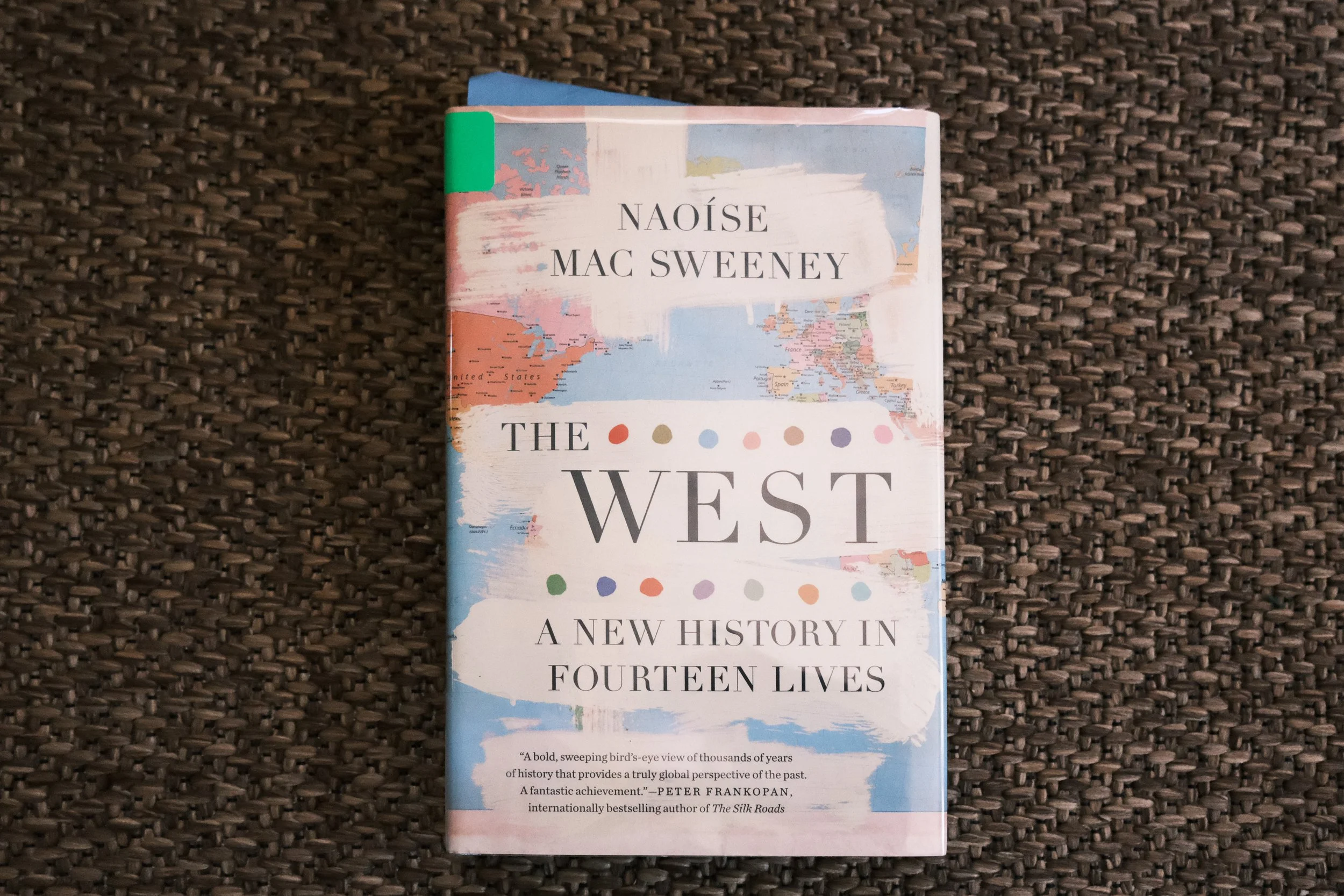

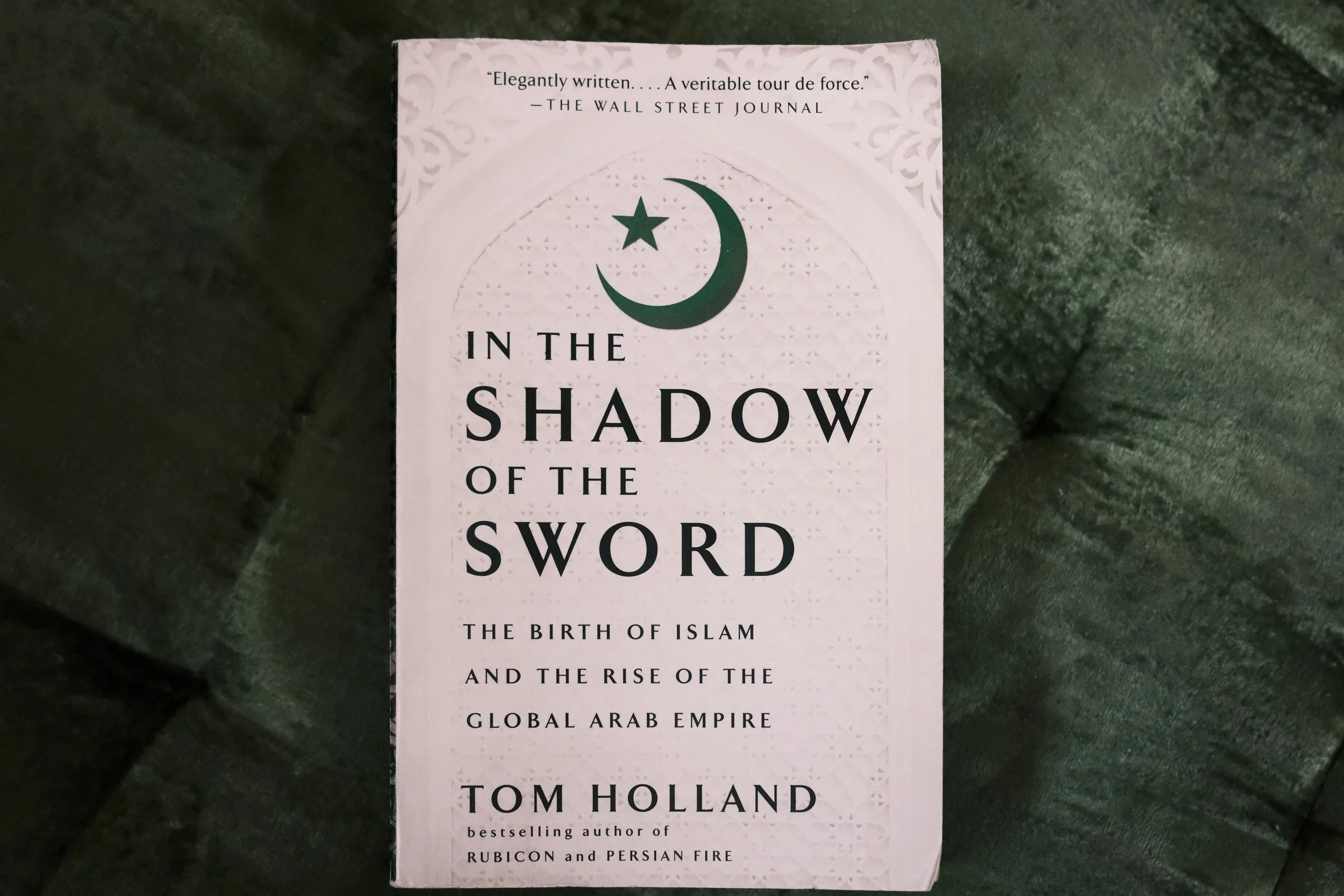
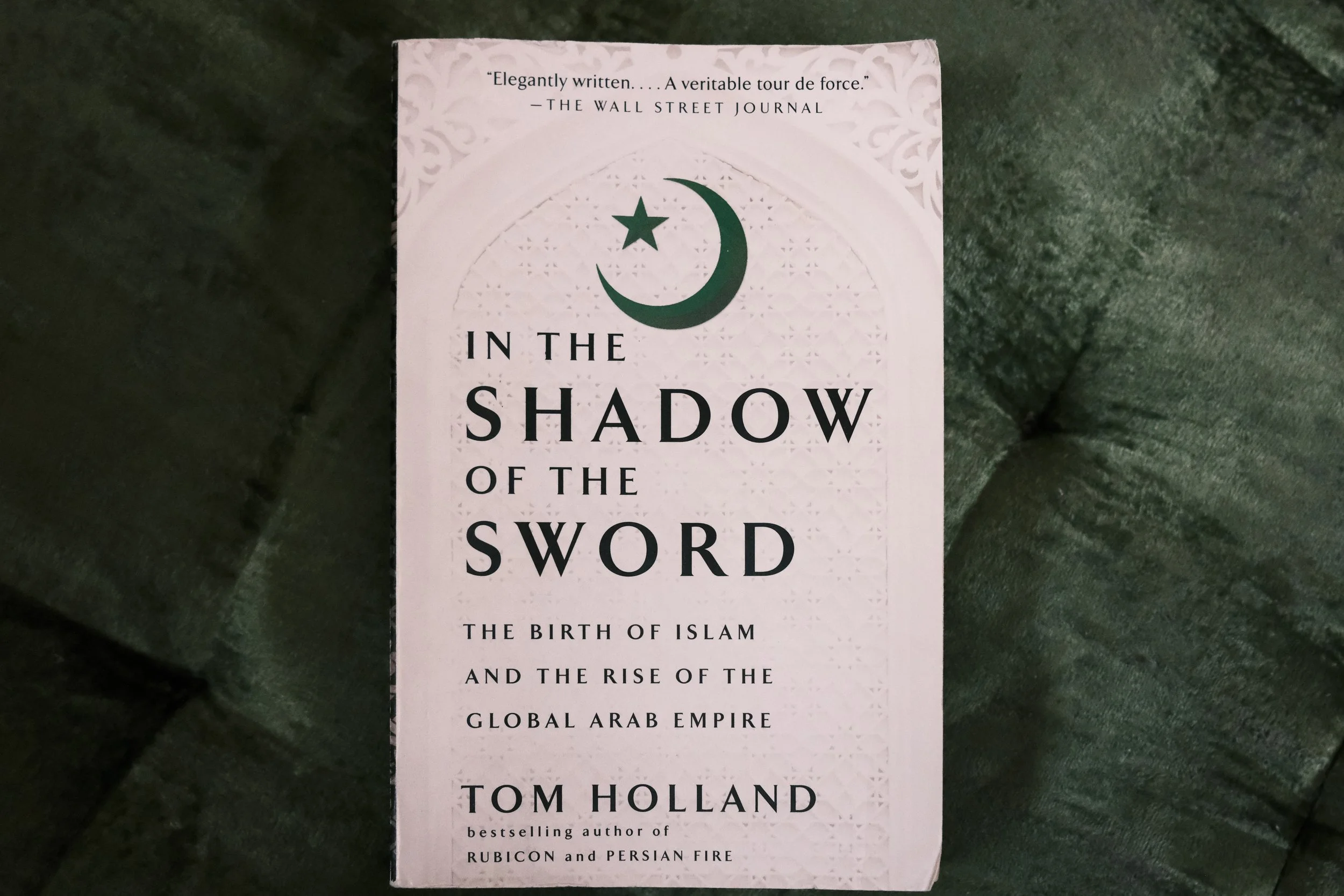
in the shadow of the sword
by Tom Holland (not that Tom Holland)
As the last of the three Abrahamic religions to arrive on the world stage, Islam is traditionally considered by academic scholars to have been “born in the full light of history.” The founding of Islam occurred centuries after the completion of the Old and New Testaments, benefiting from the work of Jewish and Christian scholars whose ultimate achievement was “to craft an interpretation not only of their own various forms of monotheism but of religion itself.” The author argues that the emergence of Islam in the seventh century therefore not only contributed to the end of late antiquity, but embodies its culmination.
The author also challenges this “full light” understanding and asserts that the birth of Islam is instead shrouded in an “almost impenetrable darkness.” He questions the veracity of Islamic religious texts that provide the foundation for Muslim tradition and relies on his knowledge of neighboring empires (Persia and Rome) and their regional influence in order to establish his own speculation. The author focuses on Mesopotamia and the Levant rather than the Arabian peninsula to suggest that Mecca is not the true birthplace of Islam. The application of secular scholarship to traditional religious understanding by a non-practitioner is bound to attract attention and generate controversy - this effort has succeeded on both counts.
The Qur’an, the holy book that is understood to be the word of Allah, shares in writing the verbal message that was revealed in its entirety by God to the Prophet Muhammad through the angel Gabriel. This occurred over the duration of two decades at the beginning of the seventh century and resulted in the understanding that the Qur’an is eternal and not created; divine, not a reflection of God.
The spiritual, moral, and political teachings derived from the Qur’an subsequently spread and helped establish an expansive empire (in the form of four successive caliphates) that stretched west from Mecca to North Africa and the Iberian peninsula, and east through Persia to Afghanistan, enduring for centuries and greatly influencing not only the beliefs and behavior of people over a vast geographic area but the eternal destiny of their souls as well. This group of believers subsequently grew into a truly global community (the most populous Muslim-majority country today is Indonesia).
Prior to the birth of Islam, Arab tribesmen maintained nomadic lives in the desert of the Arabian Peninsula, near the two aforementioned great powers: Rome and Persia. The (military) services of the nomads were often requested by the two empires, who frequently fought each other for dominion and influence over territory at the periphery of their borders.
Rome and Persia, according to the author, laid the foundations for a world in which “the yearning to fathom the purposes of a single god had become universal, and Gabriel a name on everybody’s lips.” The Jews, Christians, Zoroastrians, Samaritans, and Gnostics who could be found living and worshipping within these empires all had concepts (regarding the messiah, the world divided into warring factions of good and evil, “no god but God,” the possibility for a revelation of the divine to descend via angels to chosen mortals) that are found in the Qur’an, which supports the author’s argument that Islam was influenced by and benefited from the results of developmental struggles of the region’s religions that had been founded earlier.
Whereas Christ is considered divine in the Christian faith, the record of his life documented in the Bible is not. In Islam, the opposite is true: the Prophet’s revelations are considered divine, but the Prophet himself is no more than a messenger. However, in the “Messenger of God,” Allah had informed the faithful that “you have an excellent example to follow,” a role model whose “pattern of behavior” is “fit to serve all mankind, all eternity.” The hadiths (maxims of the Prophet), isnads (struts and supports of the hadiths), sunnah (laws to regulate), as well as the biographies of Muhammad all serve to complement the Qur’an and demonstrate how the Prophet’s behavior should be emulated.
A tradition that “attributes the origins of the Qur’an… to an illiterate man living in a pagan city in the middle of the desert,” the author writes, is unlikely to “strike those historians raised in the traditions of secular scholarship as entirely satisfactory.”
notes:
“scholarship, like nature, abhors a vacuum.”
the four caliphates: Rashidun (632-661), Umayyad (661-750), Abbasid (750-1517), Ottoman (1517-1924)